Showing posts with label Section 4(f). Show all posts

Tuesday, January 6, 2015

New AIS Testimony: Rail Route Illegally Damages Hawaiian Cultural Properties

AIS Testimony: Rail Route Illegally Damages Hawaiian Cultural Properties


by John Bond, Kanehili Cultural Hui

Saturday,  June 1, 2013


Numerous groups and organizations submitted comments and testimony on the 22 mile Honolulu Rail Archaeological Impact Statement (AIS) to the State Historic Preservation Division (SHPD) to meet the May 30th Deadline.

The new AIS comment period had been extended because of last year's Hawaii Supreme Court ruling that the rail AIS cannot be done in phases or segments.

The previous 2009 AIS omitted a great deal of valid cultural information, many groups were not consulted, and data was skewed to fit a 'rush-to-begin-building-the-rail' agenda, rather than any attempt at honest historic and cultural preservation.

The law finally caught up with them.

In his ruling, Federal Judge Wallace Tashima made a special point of noting his concern about the identification of Traditional Cultural Properties (TCPs) along the HART rail route. It was later made clear in recent HART meetings that TCP's include all cultures, not just native Hawaiian, as per federal law.

HART is required to also adhere to Department of Transportation Act of 1966 special provision - Section 4(f) - which stipulates that US DOT agencies-including the Federal Transit Administration (FTA), cannot approve the use of land from wildlife and waterfowl refuges or public or private historical sites unless both of the following conditions apply:
  1. There is no feasible and prudent alternative.
  2. The action includes all possible planning to minimize harm to the property resulting from use.
Hawaiian Cultural Practitioner Mike Lee, along with Hawaii Thousand Friends, submitted approximately 800 pages of detailed comment and testimony on the the HART Rail AIS covering the entire 22 mile route.

This package included maps, photographs, emails with many agencies (HART, SHPD, DLNR, BLNR, Oahu Burial Council, HCDA, etc.) that go back nearly a decade, as well as news articles, historic research and citations, legal documents and filings, native Hawaiian rights, the Clean Water Act, and much more.

A key issue for Lee is the identification of the ancient coral reef limestone along the Oahu shoreline known as Karst, which connects volcanic mountain lava tube water to the shoreline Karst reef water systems.

These water springs feed a shoreline ecosystem and was how ancient Hawaiians managed their fish ponds. The Karst was also of very high spiritual importance to ancient Hawaiians and used for sacred burials, such as downtown Honolulu on the grounds of I'olani Palace where there is an ancient Karst burial cave.

"I wanted them to know that I wasn't just making this up ten minutes ago" said Lee. "I am a Konohikist- I believe in the ecological management and protection of our very important natural island water systems. Protecting our Wahi Kapu sites is also very important to me."

Lee's testimony concerns identification and protection of important Hawaiian cultural sites along the rail route, including wahi pana (sacred sites) and wahi kapu (sacred burial areas) and their inclusion into a TCP (Traditional Cultural Properties) that would make sure these special sites, caves, caverns, springs, ponds and water systems are preserved and not contaminated during rail construction.

Also included were photographs of Kawaiaha'o Church which is a graphic example of early Karst limestone block construction. The church and surrounding walls are made of rough ancient reef from the shoreline and ancient sea shells and marine organisms can be clearly seen.

The church is also located on the site of an important ancient Karst spring. Nearby I'olani Palace and the royal guard barracks are also constructed from Karst limestone blocks from the shoreline.

In addition, Kanehili Cultural Hui also submitted another approximately 250 pages of detailed comment and testimony on the the HART Rail AIS- primarily concerned with the Honouliuli-Ewa area and the documentation of previously unidentified Traditional Cultural Properties (TCP), Ewa Historic Districts, Ewa Dec 7, 1941 Battlefield Area and an outline for a Honouliuli-Ewa Cultural Landscape Report.

Many current or former Ewa Village residents helped by supplying historic documents, maps, photos and oral histories. The Kanehili Hui name comes from the original Hawaiian name for the Honouliuli-Ewa area and is mentioned by Hawaiian goddess Hi'iaka in her famous and often quoted chants when she traveled through the Ewa Plains area aprroximately 1000 years ago.

The Kanehili Cultural Hui 501-c-3 non-profit community organization is concerned with the entire cultural history of the area- from ancient times to modern times.

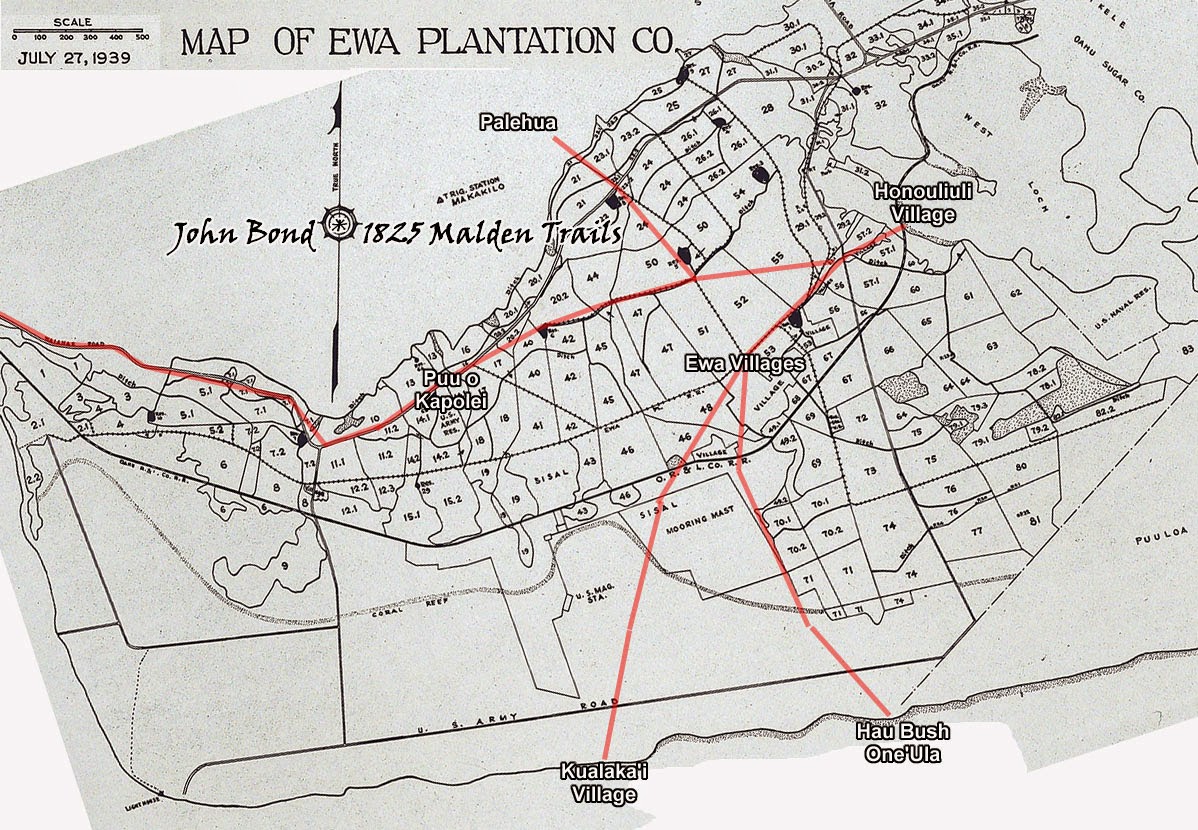
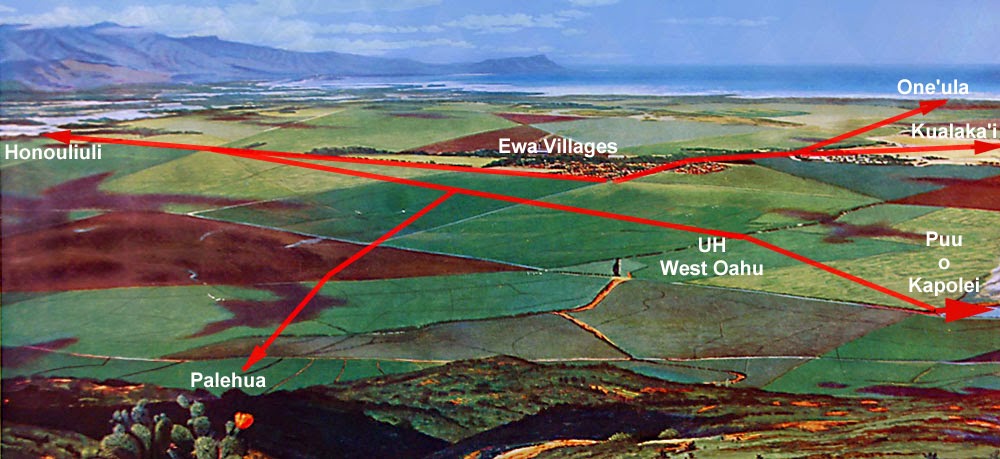
A key focus of the Kanehili Cultural Hui report and testimony was on the 1825 Malden Trails (ancient Hawaiian Trails- believed to have possibly been originally constructed by very early Tahitian arrivals to Kanehili) which played a major role in the Hawaiian cultural history of the Honouliuli-Ewa area, and which was entirely left out of the HART Rail AIS.

The fixed guideway and stations directly overlay the 1825 trails as well as the Kalo'i Karst waterway that flows to the Ewa shoreline.

Also of major importance is the identification and location of the Leina a ka Uhane, a sacred spiritual leaping off place for souls returning to the ancient homeland of Tahiti. This is a National Register eligible TCP, yet HART and the SHPD administrator has continuously tried to minimize the importance and geographic area of this TCP as well as apparently intentionally misidentify its location, despite the error being brought to their attention several times since last year.

The previous Rail AIS also failed in many ways to adequately document important Honouliuli-Ewa cultural sites such as the greater Ewa Plantation and railway network that was the largest private railway in Hawaii. The Oahu Railway that served Honouliuli-Ewa plantation railway was chartered under King David Kalakaua.

A Cultural Landscape Report (CLR) is the primary report that documents the history, significance and treatment of a cultural landscape. A CLR evaluates the history and integrity of the landscape including any changes to its geographical context, features, materials, and use.
---30---


West Oahu Eco-Disaster: HART Rail Hitting Karst Water And Polluting Ewa-Honoululi-Waipahu Wetlands

http://honouliuli.blogspot.com/2015/01/Hart-rail-disaster-hitting-Oahu.html

Friday, January 2, 2015

A Five-Minute Look at Section 4(f) Law That HART Rail Is In Violation Of In Honouliuli Ewa TCP

A Five-Minute Look at Section 4(f) Law That HART Rail Is In Violation Of In Honouliuli Ewa Traditional Cultural Properties

A Five-Minute Look at HART 

Section 4(f) Violations


What is Section 4(f)? Section 4(f) refers to the original section within the Department of Transportation (DOT) Act of 1966 which set the requirement for consideration of park and recreational lands, wildlife and waterfowl refuges, and historic sites in transportation project development. The law, now codified in two places (49 U.S.C. 303 and 23 U.S.C. 138), is implemented by the Federal Highway Administration (FHWA) and Federal Transit Administration (FTA) through regulations found at 23 CFR 771.135.

When does Section 4(f) apply? 4(f) applies to all projects that receive funding from or require approval by an agency of the U.S. DOT, including FTA. Compared to the many environmental laws that apply to FTA actions, 4(f) is considered to have stringent approval standards by statute and court interpretation.


Area of Potential Effect (APE) of West Oahu Farrington Hwy Guideway (WOFH)

Stringent approval was NEVER done. Instead FTA and SHPD were under enormous political pressure to expedite review of extremely poorly done Archaeological Inventory Surveys to meet extremely early rail construction contracts in the WOFH Honouliuli ahupua'a. The entire goal was to rush construction so that HART could say "we can't be stopped now" and this will also be their mantra as the project racks up billions in cost overruns and years of delays.    

What does Section 4(f) require? Before approving a project that "uses" a Section 4(f) resource, FTA must find that there is no prudent and feasible alternative AND that the selected alternative minimizes harm to the resource. If there is a prudent and feasible alternative that completely avoids 4(f) resources, it must be selected. If there is no prudent and feasible alternative that avoids 4(f) resources, FTA has some discretion in selecting the alternative that causes the least harm to 4(f) resources.


The 1825 Malden Map which clearly indicated a major native Hawaiian konohiki based civilization and political center at the time of Western contact. The largest population on Oahu lived here. 95 percent of the population was quickly wiped out by the introduction of Western diseases.

FTA and HART are NOT building a rail transportation as promised and sold to Oahu voters but instead using rail transit funds to pave over and destroy valuable farmland used for one-thousand year old continuous agriculture. HART is all about LAND DEVELOPMENT and offering it to foreign investors to profit with as they desire to the great detriment of the environment and cultural heritage of the Hawaiian natives and residents of the island of Oahu.  

What is a Section 4(f) resource? 4(f) resources include any publicly owned public park, recreation area, or wildlife or waterfowl refuge or any publicly or privately owned historic site.


The 1825 Malden Trails overlaid on the Ewa Plantation fields map. The largest and most profitable sugar plantation in Hawaii because of the top grade volcanic soil and abundant springs under the karst reef.

The sites where FTA transit funds are being used to encourage complete and total NUKING of farmland used continuously for one thousand years by native Hawaiians, over 100 years by Ewa Plantation and currently by truck farmers is really a gross violation in the use of transit funds and "taking" of  extremely valuable farmland that also serves as an emergency civil defense backup food source.

What is a "use"? In discussing 4(f), "use" may mean either a direct use or constructive use. A direct use occurs when land is permanently incorporated into a transportation facility or when there is a temporary occupancy of land that is adverse to a 4(f) resource. Constructive use occurs when a project's proximity impacts are so severe that the protected activities, features, or attributes that qualify a resource for protection under Section 4(f) are "substantially impaired".


HART Rail and FTA encouraging the complete destruction of highly valuable farmland used continuously for over 1000 years as a Traditional Cultural Property based on agriculture.

FTA transit funds are being used to build THREE rail transit stations on totally virgin open farmland that has been used continuously for one-thousand years. In addition the HART rail project is primarily a Land Development Scheme encouraging buildings, asphalt and concrete in a location where there never was an urban culture! In fact HART Rail doesn't even go to the main communities it was meant to serve (Kapolei and Ewa) and instead creates an ENTIRELY NEW sub CITY that will be called "East Kapolei" the local residents will have to commute to use the supposed local rail transit system.


What is feasible? An alternative is considered feasible if it can be constructed as a matter of sound engineering. Alternatives that are studied in a Draft Environmental Impact Statement or Environmental Assessment are almost always feasible; otherwise they should not be carried forward for detailed study.


Native Hawaiians are increasingly rediscovering their own culture that allowed them to maintain a highly successful and sustainable civilization for 1000 years. The Makahiki processions honored the god of agriculture- Lono. Today the god of Oahu is $$$ that all politicians worship.


FTA and HART continuously turned a deaf ear to years of comments and testimony pointing out historic and traditional cultural sites in the WOFH phase one segment. Rail Project effects on historic and cultural sites were intentionally SHAPED and BENT to deliver a "no effect" pronouncement by FTA.  


What is prudent? The Supreme Court has defined an alternative as not prudent only if it involves "truly unusual factors" or "unique problems" or the cost of community disruption reaches "extraordinary magnitudes". FTA uses a number of factors, including the project context and the severity of impacts to non-4(f) resources, in determining what is prudent.


West Oahu's new RED LIGHT district - where asphalt and concrete rule over sustainable agriculture.

Numerous studies including even by FTA and their contracted engineering firm that specialized in rail projects predicted that HART's "numbers and estimates" for construction costs and completion times were UNREALISTIC and NOT LIKELY based upon all previous real world transit projects. Yet HART and City officials promised "On time and on budget" which clearly isn't happening.  Among "community disruption" and "extraordinary magnitudes" is paying billions MORE for a project that was clearly a BIG LIE land development scheme from the very beginning. 


Land developers want to dump excess toxic water runoff into Pearl Harbor directly and into "holding ponds," where on the ancient karst coral reef will drain the toxic water into the ocean anyway.

The Rail Fixed Guideway could have saved BILLIONS by using modern state-of-the art MagLev rail technology used worldwide which is nearly noiseless, requires far less maintenance and uses smaller pylon supports, however the City would NOT ALLOW MagLev as an alternative rail consideration. Heavy steel on steel elevated rail requires hugely more expensive eight foot in diameter support columns and vastly higher maintenance costs. No other city in the United States would allow itself to be conned into a $300 million a mile construction con job that is really just a land development scheme. 


Real estate land speculation, greed and developer profits rule over sustainability and common sense. Oahu is in a remote Pacific location with an extremely short food supply that must be shipped in at ever increasing cost. Oahu is based upon a short term head in the sand Lemming Culture.

The HART Rail is also a highly corruption prone project that rewards city officials to continue to LIE, take large campaign donations, special gifts and rewards to push the project endlessly forward despite massive financial costs using a very regressive and ever increasing taxation system with ongoing theft of other City government services and programs.

What is least harm? FTA must consider many factors, not just acreage of a 4(f) resource used. Does the project shave an edge of a resource as opposed to cutting through the middle? Alter an historic building versus alter surrounding land? Take an unused portion or a highly used portion of a park? FTA must consider the net impacts of each alternative after mitigation measures have been taken into account. If two alternatives cause "substantially equal" harm to 4(f) resources, FTA may choose either one.


1000 year old top grade volcanic soil will be covered in asphalt and concrete forever. The Honouliuli Ewa area was once known as the "Golden Triangle" bread basket of the best native Hawaiian agricultural products and later as the most profitable sugar plantation- all a renewable annual resource which is now being completely killed off by FTA-HART funded land developers.

FTA transit funds are being used to encourage construction and development on top grade virgin open farmland soil that has been used continuously for one-thousand years with very high productivity. In addition the HART rail project is primarily a Land Development Scheme that removes a highly important emergency food supply, runs counter to the Hawaiian cultural practice of sustainability, encourages vast over building, asphalt and concrete in a location where there never was an urban culture.


A 1000 year old continuous traditional agricultural culture will be paved over forever destroying
it. Oahu has never seen a project of this scope destroying such a vast agricultural resource.

The impervious surface will create massive rain and flood control issues that will pour toxic runoff into interior waterways and preservation habitats killing endangered birds and poisoning reef fish, edible limu (algae) and the entire aquatic food chain. 

Does Section 106 of the National Historic Preservation Act duplicate 4(f)? There is overlap, but they are two different types of requirements enacted by Congress on the same day in 1966. 4(f) is a substantive standard, while Section 106 is essentially a consultative procedural requirement.


The only FTA-HART mitigation are Rail TOMBSTONES to remember the DEATH of 
a 1000 year old Honouliuli Ewa traditional sustainable Konohiki based agriculture.

FTA HART is definitely NOT applying Section 4f to the West Oahu HART rail project segment.

Who makes the 4(f) decision for (HART) rail projects? FTA decides whether Section 4(f) applies to a resource, reviews assessments of each alternative's impacts to 4(f) properties, and determines whether the law allows the selection of a particular alternative after consulting with the Department of Interior.


The FTA-HART Area of Potential Effect (APE) includes a major portion of Honouliuli Ewa's top grade Golden Triangle farm land. FTA chose to see NO EFFECT on any historic or cultural properties despite large amounts of TCP evidence and public comments. 

This is a massive act of corruption in itself for a federal agency under major political pressure at high levels to make very rushed decisions on what is or IS NOT an important historic Traditional Cultural Place or Property in order to meet very rushed construction timelines.


A Plan To Restore The 1825 Malden Mapped Ancient Hawaiian Trails On The Ewa Plain


CIA Helps Establish Honouliuli Ewa As A Traditional Cultural Property - Place


Honouliuli Ewa was once ruled by a the agricultural god Lono connected by a major trail network.

HART Rail Ewa Plain Route Drills Into Major 1000 Year Old Native Hawaiian Burial Grounds


HART Rail Ignores Signed Programmatic Agreement - Destroys Oahu Cultural Sites


Honouliuli National Register of Historic Places Criteria


The HART Rail Library Of Traditional Cultural Properties, Unidentified TCP's and TCP Meetings